
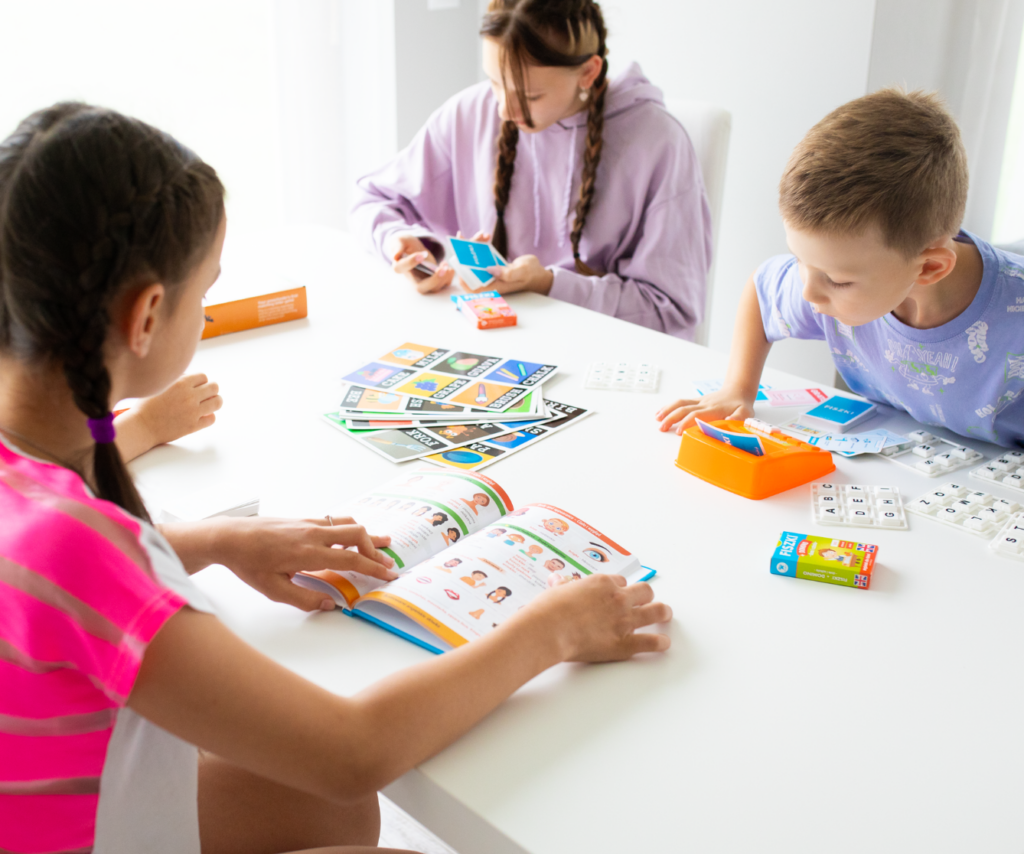
Bilingualism is the ability to use two languages, regardless of the level of proficiency or the way in which they were learned. A bilingual person is someone who has learned two languages from birth, as well as someone who has learned a second language later in life – in both cases, the benefits are the same.
Fun fact💡
The number of multilingual people in the world exceeds the number of people who speak only one language.
Why is it worth knowing a second language?
A workout for the mind
Learning a second language acts like a workout for the brain, stimulating it to work and increasing its plasticity. This makes your mind more flexible, quicker to respond to changes and better at finding solutions.
Slowing down the aging of the brain
Research confirms that bilingualism has a beneficial effect on the brain, slowing down its ageing and delaying the occurrence of dementia and Alzheimer’s disease.


Emotional intelligence
Bilingual people have higher emotional intelligence, understand others more easily and form positive relationships. Using two languages develops empathy, respect for different cultures and teaches openness.
Education and career
The knowledge of a second language can facilitate access to education in different countries. At the same time, it increases career opportunities, facilitates career development, and opens doors to the international job market.
Summary
Bilingualism is a valuable skill that has a positive impact on human development in many areas. It promotes more efficient mental functioning, supports social and emotional development, and broadens educational and professional perspectives.
Although it is never too late to learn, there is no doubt that knowledge is acquired more quickly at a younger age. Children master vocabulary and grammatical structures more efficiently, achieving natural pronunciation and fluency. Our teachers ensure that during our English lessons, children have many opportunities to hear vocabulary used in practice. The aim of the course is to children with a second language and encourage them to engage in simple conversations, which provides a solid foundation for further learning and fluent communication in the future.