Have you ever wondered how you can predict an approaching rain shower or storm? The weather can change very quickly, but nature often gives us clues that are worth paying attention to. By observing animal behaviour, cloud shapes or changes in atmospheric pressure, we can learn more about the phenomena taking place around us. In this article, we’ll take a closer look at air pressure and show you how you can observe how it works using a simple experiment with bottles.
How do we know what the weather will be like?
The easiest way to check the weather is using a weather radar app, such as windy.com. However, there are other ways to predict the weather too! We can observe how animals behave. When swallows fly lower to hunt for insects, it means rain is on the way. Dogs seeking shelter in safe, shady spots and birds taking refuge in their nests and on tree branches are signs of rain and storms. It’s also worth keeping an eye on the sky – the appearance and type of clouds can tell us a lot about the weather.
Types of clouds and what they mean
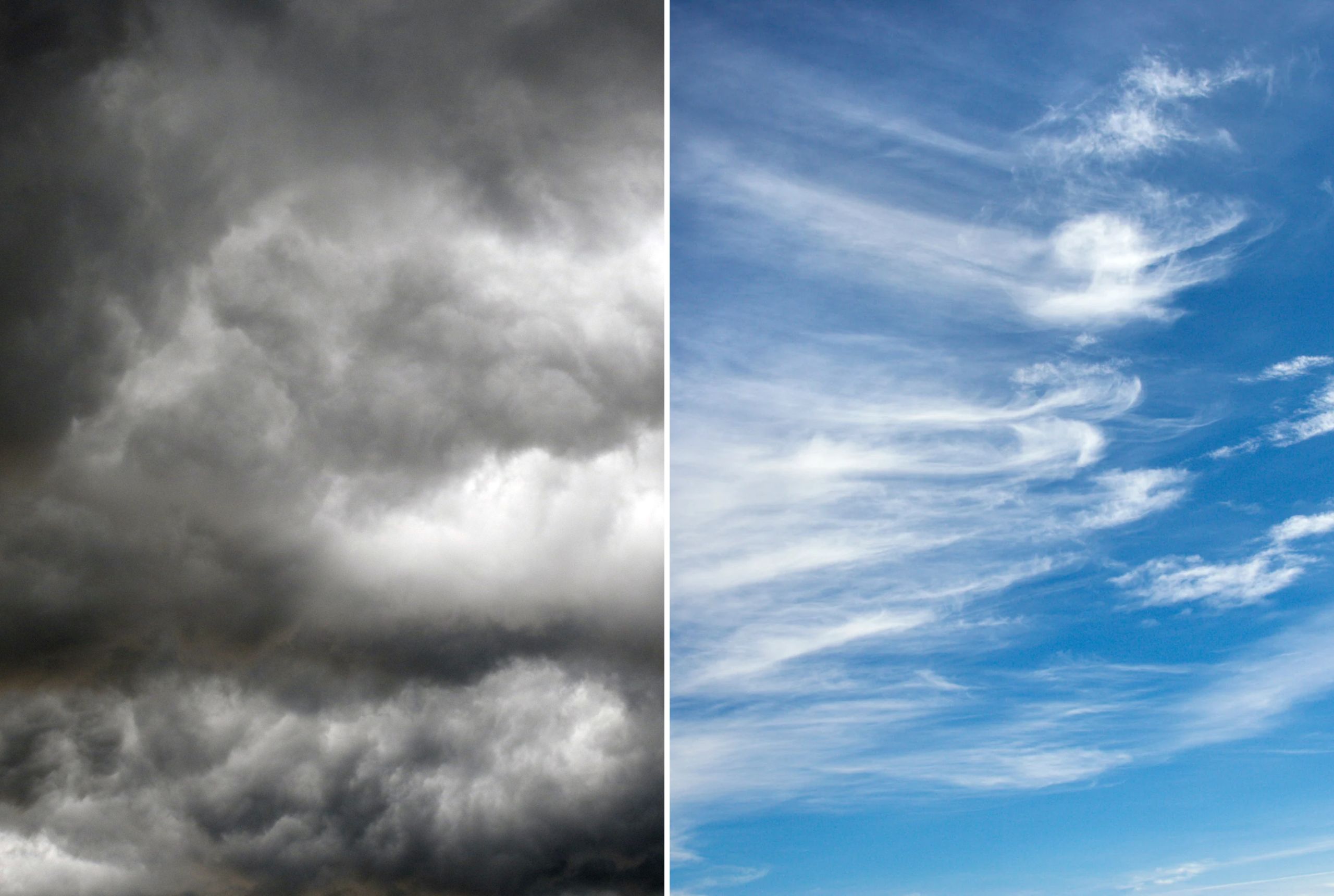
Clouds differ in appearance, altitude, and the sort of weather they indicate. Here are a few examples:
- Cirrus clouds – delicate, feathery streaks in the sky that often appear in fine weather, although they can also signal a change in the weather.
- Cumulus clouds – white, fluffy clouds that usually herald an improvement in the weather.
- Nimbostratus clouds – vast, dark clouds from which it often rains.
- Cumulonimbus clouds – massive clouds that grow darker – can signal a deterioration in the weather and the onset of storms.
What is atmospheric pressure?
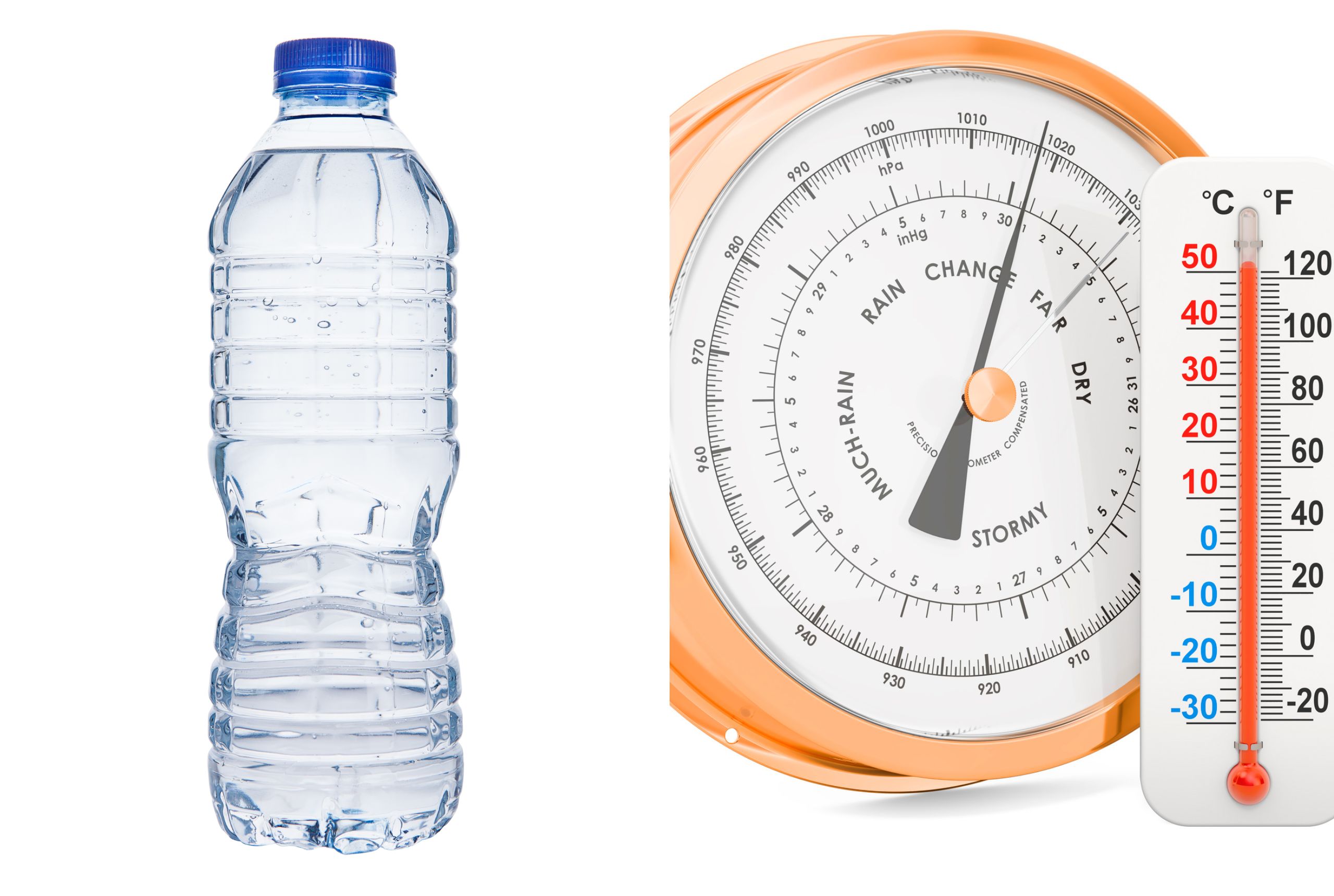
This is the pressure exerted by the air on the Earth’s surface and everything on it. Changes in atmospheric pressure cause wind and changes in the weather. Clouds and rainfall usually occur in areas of low pressure, whilst in areas of high pressure we can expect sunny weather.
An experiment with bottles
Atmospheric pressure affects us all the time, even though we cannot see it. However, we can observe its effects by carrying out a simple experiment using plastic bottles. This will show us how changes in air temperature affect pressure and why the sides of the bottle may deform.
For this experiment, we need two plastic bottles.
- Pour hot water into the first bottle, then empty it after 3–4 seconds and screw the cap back on. Observe how the shape of the bottle changes.
- Put some crushed ice into the second bottle, shake it a few times and empty it as well.
- The walls of both bottles are pushed inwards, resulting in atmospheric pressure that is lower on the inside than on the outside.<br/><br/>
Summary
Atmospheric pressure, although invisible, has a significant impact on the phenomena taking place around us. By observing clouds and the behaviour of animals, we can look for clues about the weather, and through the bottle experiment, we can see for ourselves how air pressure works.
Similar educational activities may also be included in the children’s events we organise, making the fun we have together even more valuable by incorporating interesting lessons. We invite you to take a look at our offer!
We also encourage you to check out the other articles in the ‘Labozabawy with MANU’ series – you’ll find plenty of ideas for creative experiments and games that you can do yourself at home!: