
The world of sound surrounds us everywhere – from the rustling of the wind to the fluttering of birds’ wings. Each of these sounds is created by vibrations that reach our ears. In this blog post, we explain how sound waves work, and we also show you how to make your own guitar so you can see and hear these vibrations for yourself.
On sound waves
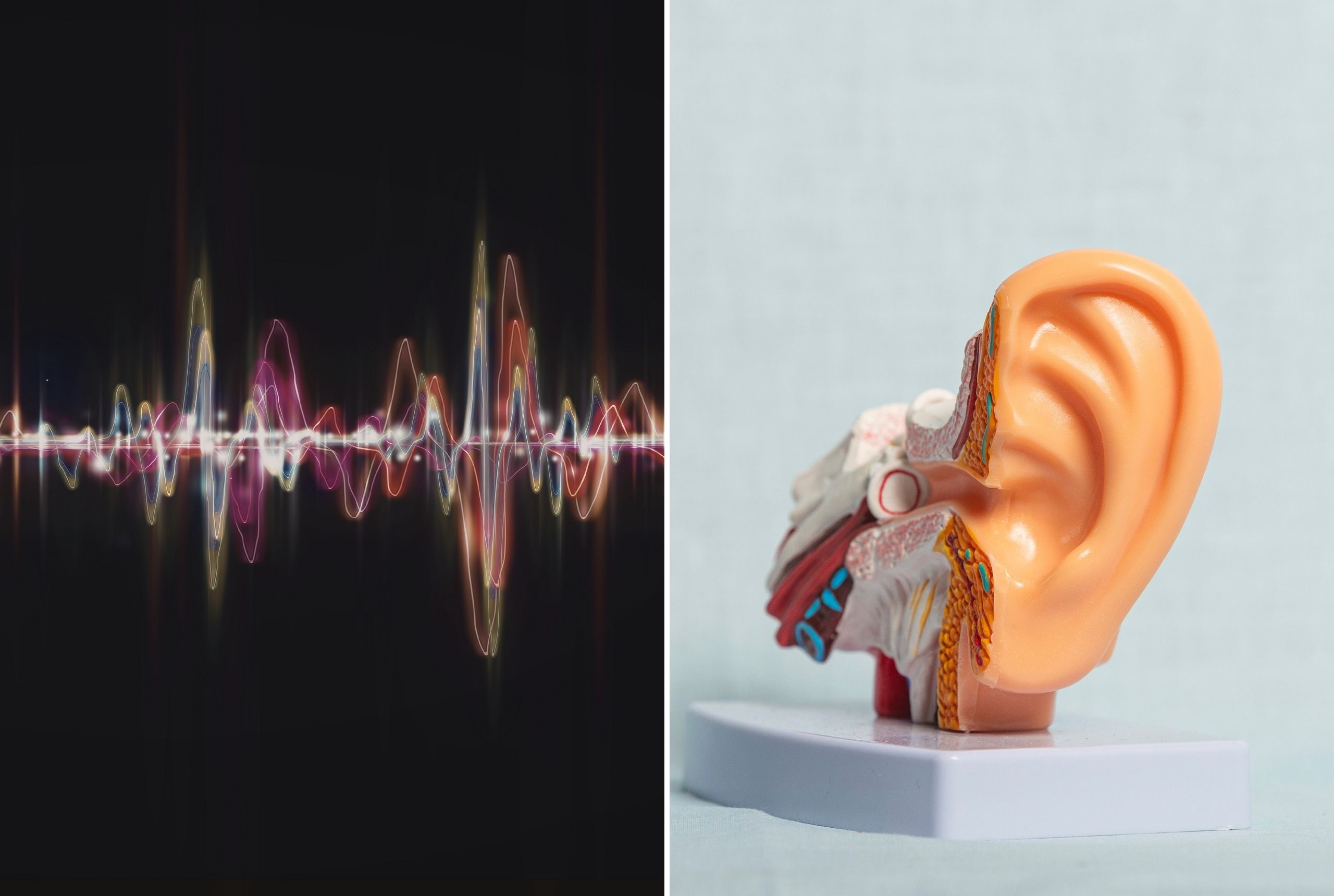
Almost half of the information we receive comes via our sense of hearing. What needs to happen for us to hear? The source of sound is vibrating objects, which transmit their vibrations to an elastic medium (usually air) – this is where the sound wave originates. We cannot hear all waves; for example, we cannot hear the movement of a spring, can we? Audible waves must have the right frequency and sufficient energy to stimulate our ear to hear them, but not too much energy, so as not to damage the ear.
How does our hearing change as we get older?
Our hearing changes as we get older – children can hear much higher-pitched sounds than adults, whilst older people lose the ability to perceive high frequencies. Sound has various characteristics, such as pitch, volume, timbre (tone quality) and speed, which influence how we perceive it.
How is sound produced? A guitar experiment
Sound is nothing more than vibrations that travel through the air and reach our ears. Thanks to this experiment, we can not only hear them, but also see them. We can make our own guitar using everyday household items and see how the pitch of the sound depends on the tension of the string.
Making our own guitars
We need plenty of rubber bands, jar lids, adhesive tape and wooden sticks. Cut the rubber bands and then tie them together – the tighter you pull the rubber bands, the higher the pitch will be. We spread the rubber bands apart and stick tape on the back so that they don’t move. We check the sound produced by each string and observe the vibrations.

Summary
Experimenting with a homemade guitar shows that sound is nothing more than vibrations travelling through the air. During the experiment, children can observe how changing the tension of the strings affects the pitch of the sound, which helps them understand the basic principles of how sound waves are produced.
Similar activities also take place as part of our events for children, where theory is combined with practice and fun. We enrich every event with engaging exercises and tasks that capture the children’s attention and allow them to learn through play.